Greater Lowell Community Foundation Deploys $1 Million Emergency Response as Survey Reveals 64% of Nonprofit Partners Hit by Funding Cuts
Three Strategic Grant Programs Support 48 Organizations Across 21 Communities as Survey Shows Nonprofit Sector Facing Mounting Financial Pressure and Service Reductions

LOWELL, MA – The Greater Lowell Community Foundation (GLCF) today announced it has deployed $1 million in emergency funding to 48 nonprofit organizations across its 21 community service area in response to unprecedented funding cuts that a 2026 survey reveals are affecting 64% of the region’s nonprofit sector.
GLCF’s 2026 Federal Funding Impact Survey, released last month, found that 54% of responding nonprofits experienced direct federal funding cuts in 2025, with an additional 10% reporting indirect impacts through partner organizations. The survey of 41 organizations reveals a sector under mounting pressure: 37% report conditions have worsened since Fall 2025, nearly two-thirds express concern about long-term financial sustainability, and eight organizations report significant or severe impact on their ability to serve the community.
“The data tells a sobering story about the state of our nonprofit sector, but it also reveals the remarkable resilience and creativity of organizations working to maintain critical services for our community’s most vulnerable residents,” said Jay Linnehan, GLCF President and CEO. “Our $1 million investment, made possible through our generous funding partners, represents an immediate, strategic response to help organizations weather this transition while maintaining the safety net our communities depend on.”
The $1 Million Response: Three Strategic Programs
Between October 2025 and January 2026, GLCF launched three complementary grant programs totaling $1 million:
- Community Connection Grants (October 2025): $100,000 distributed to 10 proven partners ($10,000 each) working to advance equity and strengthen community connections across diverse needs including youth development, cultural support, food security, education, healing services, and economic empowerment.
- Food Insecurity Response Grants (November 2025): $200,000 to 15 food pantries and emergency feeding programs, including a $50,000 allocation to Merrimack Valley Food Bank that leverages an 8:1 purchasing multiplier to generate $400,000 in food value.
- Resilience and Care Grants (January 2026): $700,000 to 47 organizations addressing eight priority areas including food security ($161,000), community connection/equity ($175,000), multi-service basic needs ($109,000), youth development and mental health ($80,000), health and mental health ($65,000), immigrant support and legal advocacy ($60,000), and housing and shelter ($50,000).
The initiative funded 48 unique organizations, with 15 receiving support from multiple programs, demonstrating GLCF’s commitment to sustained partnership with high-performing community anchors.
Survey Reveals Sector Under Pressure
The survey, conducted in February 2026, provides the most comprehensive assessment of funding impacts on Greater Lowell’s nonprofit sector:
- Financial Impact: Thirteen organizations have lost between $50,000 and $500,000 or more cumulatively, with two organizations losing over $500,000.
- Operational Strain: Increased staff workload and stress (22 organizations), increased administrative burden (16), reduced client capacity (14), staff/hour reductions (13), and eliminated programs or services (13) are the most common impacts.
- Vulnerable Populations: Service reductions disproportionately affect low-income families (24 organizations), immigrants/undocumented individuals (19), and children/youth (19).
- Uncertain Future: Twenty organizations (49%) say additional 2026 cuts are “possible but unclear,” while six know of planned cuts. Only two organizations have fully replaced lost funding; 14 (34%) say it’s “too early to tell.”
- Response Strategies: Organizations are pursuing foundation grants (35), increased individual donations (35), state/local funding (22), and special events/fundraising (16). Notably, 13 organizations have had to dip into reserves, a concerning indicator of financial strain.
One organization reported receiving notice that, effective October 1, 2026, its federally funded Youth & Children Program, Health Advocacy program, and trauma-informed behavioral health services will be cut completely—core services for immigrant and refugee families that will cause immediate service interruptions and likely staff reductions.
What Organizations Need Most
When asked to identify their top support needs, 37 of 41 organizations (90%) prioritized unrestricted, multi-year funding that enables rapid response to evolving challenges and reduces administrative burden. Organizations also emphasized the need for emergency/rapid-response capacity, practical capacity-building support for financial management and donor engagement, and sector-wide collaboration opportunities.
The sector shows strong appetite for collaboration: 22 organizations (54%) are “very interested” in partnering with other nonprofits on shared challenges, and an additional 13 (32%) are “somewhat interested.” Multiple organizations requested GLCF convene similar service providers to identify collective impact strategies and shared funding opportunities.
“We are incredibly grateful that individual and foundation donors have stepped up with funding to help us address food insecurity,” one organization shared in the survey. Another emphasized: “Unrestricted, multi-year support helps our organization respond quickly to challenges and needs of the community.”
Sustaining the Safety Net
“This survey confirms what we’ve been hearing from our partners: the nonprofit sector is navigating a challenging and uncertain landscape,” said Jennifer Aradhya, GLCF’s Vice President of Marketing, Programs & Strategy. “But it also reveals tremendous resilience and a clear appetite for collaboration. Our role is to provide the flexible funding, strategic convening, and capacity-building support that enables organizations to continue their vital work.”
All $700,000 in Resilience and Care Grants funding has been distributed. The combined impact of GLCF’s three grant programs establishes a model for community foundation response to systemic crises, balancing immediate emergency relief with strategic investments in organizational capacity and long-term community resilience. To contribute to GLCF’s Resilience and Care Fund, the foundation’s rapid response fund, visit: https://glcfoundation.info/resilience.
The executive summary of the survey report is available at https://glcfoundation.info/3ObIP0l.
About Greater Lowell Community Foundation
Established in 1997, the Greater Lowell Community Foundation (GLCF) is a philanthropic organization comprised of more than 500 funds dedicated to improving the quality of life in 21 neighbouring cities and towns. With financial assets of over $75 million, GLCF annually awards grants and scholarships to hundreds of worthy nonprofits and students. The generosity of our donors has enabled the Community Foundation to award more than $50 million to the Greater Lowell community.
###
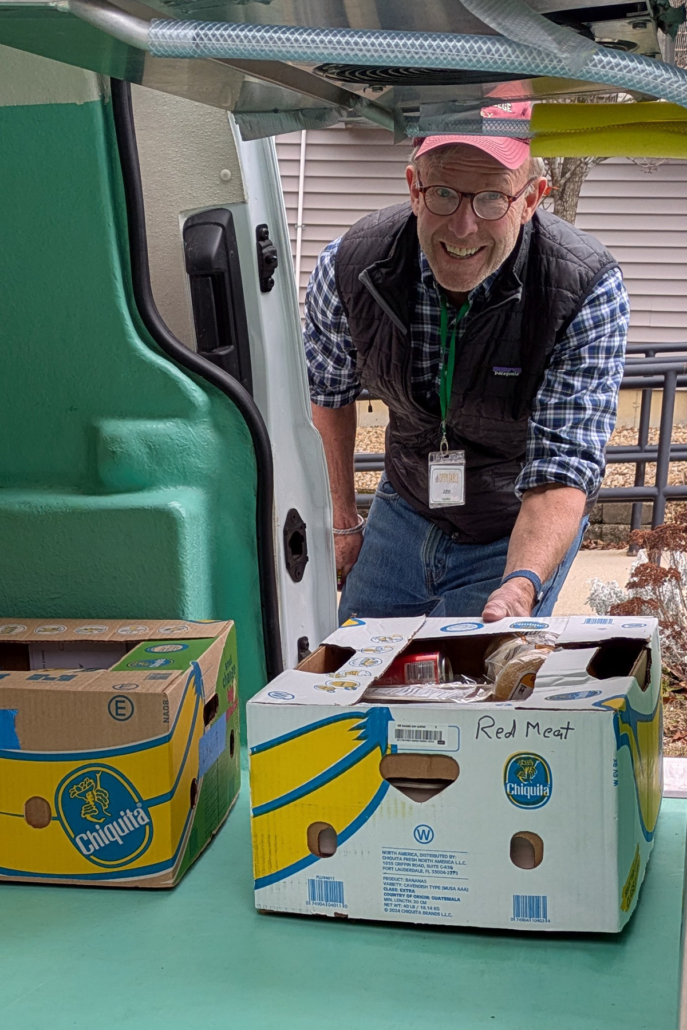
CAPTION 1: An Open Table volunteer loads up their refrigerated van to bring food to a mobile partner, the organization received recent grant funding through the Resilience and Care Fund.
CAPTION 2: Discovery Museum’s fully accessible Discovery Woods nature playscape brings nature exploration, gross motor play, and pure joy to kids of every ability. Pictured here is the accessible Nest Swing. Discovery Museum received recent grant funding through the Resilience and Care Fund.
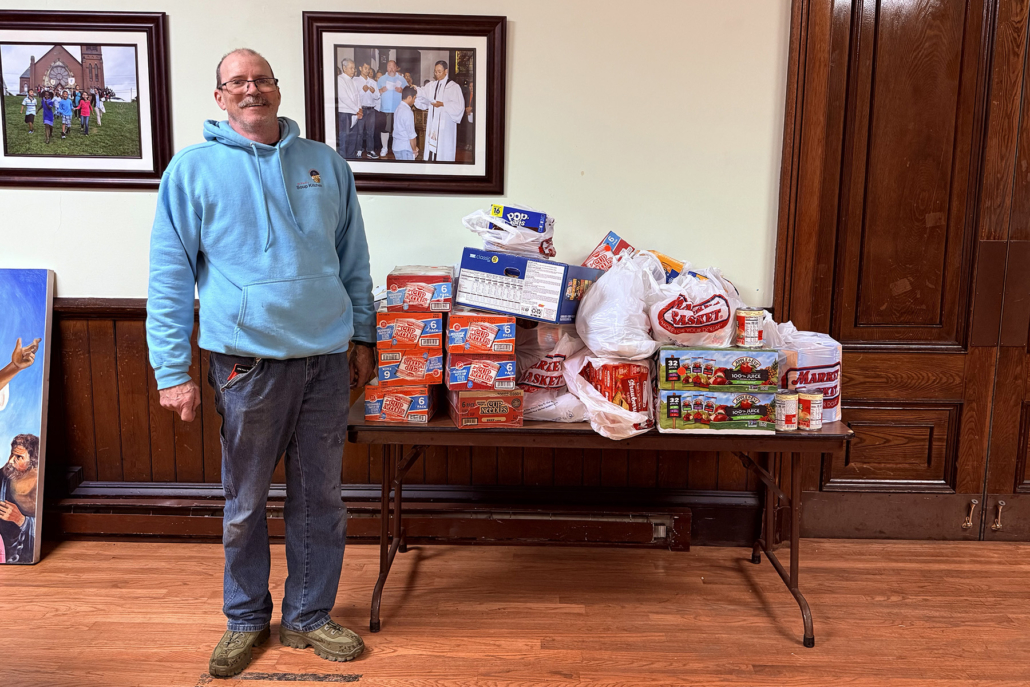
CAPTION 3: St. Paul’s Soup Kitchen’s Richard forest stand next to a sampling of food distributions offered. St. Paul’s Soup Kitchen received recent grant funding through the Resilience and Care Fund.