As nonprofit funding tightens, low-income families and youth face service cuts
 GLCF recent survey shows vulnerable populations losing services as organizations reduce capacity under federal, state and private funding pressures
LOWELL, Mass. — Low-income families, children and youth are among the hardest-hit populations losing nonprofit services as organizations across the region respond to shrinking federal funding, state budget cuts and intensified competition for private grants, according to a new survey by the Greater Lowell Community Foundation.
Of the 75 nonprofits responding to the foundation’s September 2026 survey, 52% report reduced services to low-income families. Forty-nine percent cite cuts affecting children and youth, and 27% report reduced services to immigrants and undocumented individuals.
The timing could not be more troubling: As federal benefit programs contract and economic pressures mount on hardworking families, the nonprofits those families depend on are losing the resources to help.
“We’re looking at a double squeeze on the families and kids we serve,” said Jennifer Aradhya, vice president of marketing, programs and strategy at GLCF. “They’re losing federal benefits — SNAP reductions, housing assistance cuts — and at the same time, the food banks, youth programs and family services that fill the gap are struggling to meet demand because they’re losing funding too. That’s not a coincidence. It’s a direct consequence of federal policy changes rippling through our community.”
Documented service reductions
• 14 organizations (19%) eliminated programs or services entirely
• 18 organizations (24%) reduced client capacity, serving fewer people
• 13 organizations (17%) experienced delays in service delivery
• 31 organizations (41%) cannot meet current community demand with available resources
These consequences are playing out across Greater Lowell. A food bank serving more than 75 communities is keeping fewer reserves on hand. An after-school program has cut its hours. A legal aid organization faces growing waitlists.
A perfect storm: Federal, state and private funding all tightening
One-third of respondents (33%) experienced direct federal funding cuts. But the pressure extends beyond Washington:
• State funding decreased for 31% of nonprofits. With federal support shrinking, state budgets are under pressure, and allocations to nonprofits are being cut.
• Private funding is more competitive than ever. Eighty-five percent say foundation and private grant funding has become more competitive, and 40% report that less than 25% of their grant applications are funded.
• Individual giving has declined for nearly one-third. While 45% report stable individual donations, 31% say individual giving has decreased.The result: Organizations are competing harder for fewer resources, and the margin for maintaining full-service capacity is disappearing.
Nonprofits brace for worse
Seventy-five percent of respondents describe their outlook for the next 12 months as cautious to very concerned. They cite pending federal and state funding decisions, anticipated grant awards that may not materialize and uncertainty about the sector’s direction. In other words, many nonprofit leaders believe the situation could worsen before it improves.
GLCF’s response: Strategic support to close the gap
GLCF is responding to these findings with expanded and refocused grantmaking:
• Priority funding for smaller local organizations serving low-income families, children, and vulnerable populations
• Convenings that bring nonprofits together to share strategies and coordinate a regional response
• Trust-based funding with streamlined reporting
“Nonprofits in this community are doing heroic work on impossible budgets,” Aradhya said. “GLCF’s role is to ensure they have the resources and support they need to continue serving the families and kids who depend on them. That means flexible funding, a coordinated philanthropic response and advocacy. That’s our commitment.”
About the survey
The Summer 2026 State and Federal Funding Impact Survey gathered responses from 75 nonprofit organizations serving Greater Lowell and surrounding regions. Respondents represent education and youth development, food security, social services, housing, health care, arts and culture, environmental services and more. The full report is available at https://glcfoundation.info/S26Survey.
How you can help
GLCF continues to expand grantmaking and coordinate the funder response, but community support is urgently needed now. GLCF’s Resilience and Care Fund provides rapid-response grants to nonprofits serving vulnerable populations with urgent basic needs. These include food, housing, fuel assistance, immigrant support, and health and mental health services.
GLCF is planning a year-end distribution to nonprofit partners, so funds raised now will reach organizations serving the region’s most vulnerable residents at a critical moment. Every dollar raised expands what GLCF can distribute.
“Earlier grants from the fund went out quickly to meet immediate needs, but there is more to do,” said Jay Linnehan, president and CEO of GLCF. “As we finalize a second round of funding, I encourage you to help grow our community’s resilience by adding your own contribution. Every gift, no matter the size, strengthens the safety net that catches our neighbors when they fall, and every dollar will go directly to nonprofit partners working on the front lines this year.”
To contribute to the Resilience and Care Fund, visit glcfoundation.org/resilience.
###
About the Greater Lowell Community Foundation
Established in 1997, the Greater Lowell Community Foundation (GLCF) is a philanthropic organization comprised of more than 500 funds dedicated to improving the quality of life in 21 neighboring cities and towns. With financial assets of over $75 million, GLCF annually awards grants and scholarships to hundreds of worthy nonprofits and students. The generosity of our donors has enabled the Community Foundation to award more than $50 million to the Greater Lowell community.
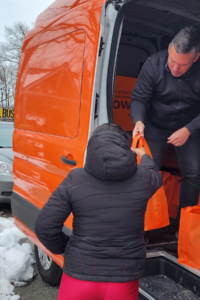
CAPTION: GLCF’s recent survey shows vulnerable populations, such as children, are losing services as organizations reduce capacity under federal, state and private funding pressures. Community Members Receiving Food Bags from YWCA of Lowell Roaming Resources Van at Greenhalge Elementary School.