Greater Lowell Nonprofit Leaders Sound Alarm: 75% Expect Funding to Worsen
GLCF survey reveals deepening crisis as federal cuts, state budget pressure, and foundation competition squeeze the sector
LOWELL, MASS. – The Greater Lowell Community Foundation’s recent Nonprofit Funding Landscape Survey offers a clear warning from those who know the sector best: nonprofit leaders expect conditions to worsen significantly over the next 12 months.
Of 74 nonprofit executives surveyed in July–September 2026, 75% describe their funding outlook as “very concerned” or “cautious/somewhat concerned.” Only 15% voice optimism. That forecast carries weight—these leaders read federal budgets, track foundation trends, and manage the frontlines of the crisis in real time.
“Nonprofit leaders see the landscape more clearly than anyone,” said Jennifer Aradhya, Vice President of Marketing, Programs & Strategy at GLCF. “When three in four tell us they’re concerned about the year ahead, that is information we have a responsibility to act on.”
The Data Behind the Concern
The survey shows why nonprofit leaders are bracing for impact:
Federal funding is already contracting. 33% of nonprofits have experienced direct federal cuts in the past 12 months—ranging from less than 10% to more than 50% of their total budgets. State funding has decreased for 30%. Municipal funding has decreased for 32% of those who receive it.
Private funding competition has intensified dramatically. 85% report that foundation and private grant funding has become “more competitive,” and 40% succeed on fewer than 25% of their applications. This means organizations submit multiple applications to land a single grant—a resource drain at a time when nonprofit capacity is already stretched.
The operational toll is real and growing. 19% have eliminated entire programs. 41% cannot meet existing community demand. 49% report increased fundraising burden. Half report increased staff stress, and 28% have frozen wages while inflation eats away at salaries.
What This Means for Greater Lowell’s Most Vulnerable
If conditions worsen, the damage will fall hardest on those already struggling. Over half (51%) report reduced services to low-income families. 49% cite cuts affecting children and youth. 27% report reduced services to immigrants and undocumented individuals.
Seniors (24%), people with disabilities (23%), and homeless individuals (20%) are also facing reduced service access. Food banks have fewer reserves. After-school programs have cut hours. Legal aid organizations face growing waitlists.
GLCF’s Response: Strategic Intervention
GLCF recently deployed $150,000 in immediate year-end support through the Resilience and Care Fund, targeting the organizations and populations nonprofits identified as most at risk.
“Community foundations exist for moments like this,” said Jay Linnehan, President and CEO of GLCF. “When nonprofit leaders tell us things are about to get harder, that is our signal to move faster and bolder. We cannot wait for federal budgets to stabilize. We need to act now.”
How You Can Help
To support nonprofits navigating this crisis, contribute to GLCF’s Resilience and Care Fund at glcfoundation.org/resilience. Every dollar goes directly to nonprofits on the front lines.
For the complete survey data and analysis, visit glcfoundation.info/S26Survey.
###
About Greater Lowell Community Foundation
Established in 1997, the Greater Lowell Community Foundation (GLCF) is a philanthropic organization comprised of more than 500 funds dedicated to improving the quality of life in 21 neighboring cities and towns. With financial assets of over $75 million, GLCF annually awards grants and scholarships to hundreds of worthy nonprofits and students. The generosity of our donors has enabled the Community Foundation to award more than $50 million to the Greater Lowell community.
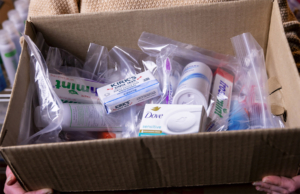
CAPTION: GLCF’s recent survey shows vulnerable populations are losing services as organizations reduce capacity under federal, state and private funding pressures. Products ready for distribution from Hope & Comfort Hygiene Hub. Hope & Comfort received a recent Resilience and Care Grant to increase the availability of essential hygiene products for distribution in the Greater Lowell region.